A Lifetime of Becoming: Honouring the Immensity of Women’s Hormonal Transitions
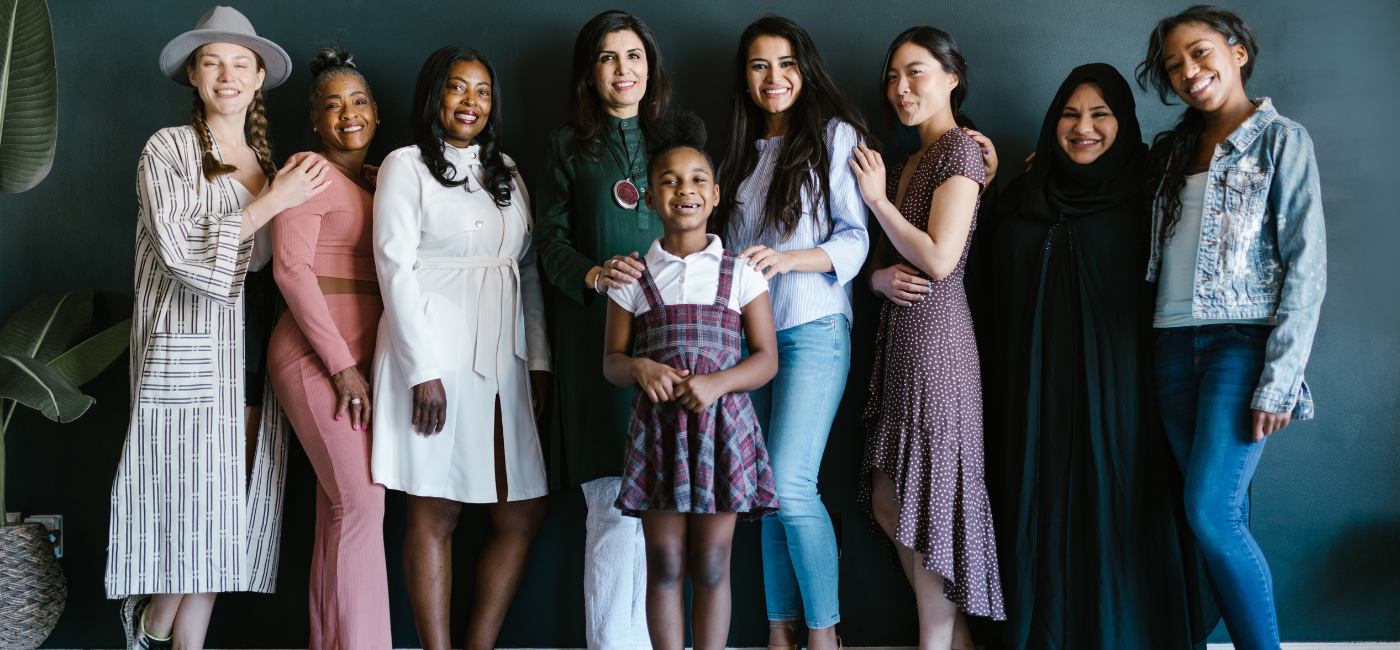
As women, our life is punctuated by significant hormonal transitions: from menstruation to the cyclical ebbing and flowing of hormones throughout our monthly cycles, from our peri- and postnatal journeys if we have children, to peri- and post-menopause transitions.
Our bodies are innately cyclical - and yet, so much about the significant transitions we experience throughout our lives is still underplayed and deeply misunderstood.
Our culture continues to assume that a woman who has just given birth is essentially herself, just with a baby. Or that a woman moving through perimenopause will remain mostly as she was before, simply with more erratic hormones.
But these transitions are not minor adjustments. They are not just biological events unfolding in the background alongside the rest of our lives.
They are whole-person reorganisations: of our body, our nervous system, our hormonal landscape, our sense of Self, and the relationship we have with our work, family, values, and future.
They are thresholds. There is a before and an after, and those two places are often much further apart than the outside world realises.
These thresholds may include menstruation, postpartum, perimenopause, menopause and the many cyclical shifts that shape a woman’s body and life over time.
The immensity of what they ask of us can be difficult to convey to someone who has not moved through them. We can describe the exhaustion, the extra sensitivity, the anxiety, the tenderness, the rage, the grief, the strange feeling of being both familiar and unknown to ourselves. But some experiences have to be lived first-hand through the body to be fully understood.
This blog post felt important to write because I know, personally and through accompanying many women moving through these thresholds, that being seen in the scale of what we are navigating helps to normalise our experience and can be - in itself - a form of inner nourishment.
It helps interrupt the pervasive and corrosive thought that we should somehow be finding this easier, and that we are failing if we’re not.
And I also believe that we need to reconsider how women are supported through these key moments. Moving from the expectation that we will keep functioning as we were before, towards offering the kind of care that meets us as and where we are - rather than how we should be.
We Are Not Simply Who We Were
When a woman gives birth, something shifts that goes far beyond the arrival of a new baby, which in itself is life-altering.
Her body has moved through one of the most physically demanding experiences a human being can have. Her hormones, body and nervous system shift considerably through this incredible transition.
Within hours of birth, our hormonal landscape changes dramatically. Oestrogen and progesterone fall. Oxytocin and prolactin rise and fluctuate in relation to feeding, bonding, recovery and attachment. Our emotional and neurological inner landscape is not the same as it was only a few days before.
Our nervous system also becomes exquisitely attuned to a new life.
The smallest sounds, movements and changes in our baby can register through our body before our thinking mind has caught up. Our senses sharpen. Our sleep becomes fragmented and the bond between us and this tiny human being can feel both incredibly beautiful, and overwhelming at times.
And alongside all of this, our identity also begins to reorganise.
Within a day of my daughter being born, I found myself sitting by the river nearby in tears, hit by the grief of the life I was leaving behind … unclear about the life that would unfold forward.
And I hear so many similar stories.
We are not just ourselves with a baby.
The entirety of what we have known is shifting.
Yet so often, the world expects us to recover quickly, to bounce back, to function and hold this entirely new way of living together as if we had done it our entire life.
There can be so many layers of emotions at play: love and grief, gratitude and anxiety, joy and exhaustion,…
And there is a vital need to be supported as we slowly integrate who we are becoming.
A Life of Thresholds: Perimenopause and Menopause
Later in life, when perimenopause begins to unfold, the terrain shifts again.
For many women, this begins in their late thirties or early forties, long before we might expect it.
The gradual fluctuations and eventual decline of oestrogen and progesterone do not just affect mood, sleep or temperature. These hormones are involved in how the nervous system regulates itself, how emotions are processed, how we experience stress, connection, boundaries, creativity and our own sense of Self.
It can feel as though the ground beneath life as we’ve known it is turning into quicksand.
For many women, perimenopause is not only a hormonal transition but an emotional, relational and identity transition too.
We are navigating a transition of significant complexity, and this often happens while we continue to meet the demands of our careers, our families and perhaps tend to ageing parents who might be needing more care.
But the perimenopause and menopause do not only bring symptoms, they bring revelations.
They can illuminate where we have been living out of alignment: with our own rhythms, our capacity, our desires and our values. A doorway to reclaiming our life.
Meeting Ourselves And Our Body With Compassion
We all move through these seasons of change and transition in unique ways, because we all live in layers of context that are uniquely ours. For some of us these transitions are more easeful, resourced, seamless. And for some they feel like navigating a rough sea on a raft.
But in cultures where there is no wider understanding of the depth of these transitions, we are often left to make sense of them on our own, which can bring up a lot of self-judgment.
We assume we should be more resilient, more organised, more grateful, graceful and in control.
But from a somatic perspective, these experiences make so much sense.
Our body is adapting. Our nervous system is recalibrating. Our hormonal terrain is changing. Our identity is loosening and reforming. And we are asking ourselves different questions about what matters going forward.
The old ways of coping may no longer work because they belonged to a version of us who lived in a different internal landscape.
If you are moving through these transitions, please be kind to yourself, and where you can, bring into your life layers of support that can help you feel nourished and nurtured in the deepest sense.
Not just enough support to keep functioning, but enough to begin to metabolise what is happening.
Because we were never meant to carry everything alone.
So many of us are mothering without enough nurturing, leading without enough replenishment, and caring without enough care. Moving through enormous hormonal, emotional and identity transitions while still showing up as though nothing fundamental was happening within us.
What we need in those times is to be met where we are, with compassion and patience. With the recognition that what we are moving through deserves genuine care and support.
Because while on the outside we might seem like we still have it all together, on the inside, everything often feels like it’s shifting.
What Becomes Possible When We Are Held
While these seasons of major change are immense to navigate, when we receive the holding, nurturing and care they deserve, they can integrate into greater resilience and sovereignty. Our emerging new identity is grounded in a more stable inner foundation.
Postpartum can initiate us into a love and fierceness we never knew was possible. It can clarify what truly matters and reveal where we need more boundaries, more support, perhaps even a new direction.
In Chinese medicine, menopause is sometimes referred to as a Second Spring. It can bring us into a new relationship with our power. We may become less willing to please and appease, our boundaries might become firmer. Our power begins to root deeper within, in a desire for alignment and authenticity.
These transitions can become portals into a more sovereign life.
They become transformative when we are given the conditions to metabolise them.
When there is enough space, support and steadiness around us, the body can begin to reveal what is no longer sustainable. It can be incredibly clarifying.
And with the right support, they can guide us into a life that is less organised around self-abandonment and more rooted in truth.
Why Women-Centred Somatic Approaches Are Vital
This is why my work as a somatic practitioner, and the heart of The Wisdom Within™ Practitioner Training, centres women.
Because our experiences as women are uniquely shaped by our hormonal cycles, the thresholds we navigate throughout our life, our conditioning and the low-nurture society we live in.
As women, we deserve to be held in ways that honour the cyclical intelligence of our bodies.
I believe these transitions can be doorways - they offer an invitation not to rush back to who we were, but to meet ourselves, and the women we support, with enough depth and attunement so that the wisdom within this becoming has space to emerge.
If you are navigating a transition, or would like to support women through these thresholds in a way that truly centres women’s experiences, bodies and nervous systems, you are welcome to book a call with me here. Together, we will explore how this could support you personally, or your work as an existing or aspiring practitioner.
You might also be interested in:
Why Women Deserve Somatic Approaches That Honour Their Body, Cycles and Lived Experience
The Edge of Burnout: Listening to the Body Before It Shuts Down
Somatic Practices to Support You When You Feel Drained, Flat, or Numb
The Missing Piece For Women To Feel More Rested, Radiant, and to Embrace Their Fullest Potential